Crypto Chart Analysis Tools & Tutorials for Beginners 2026
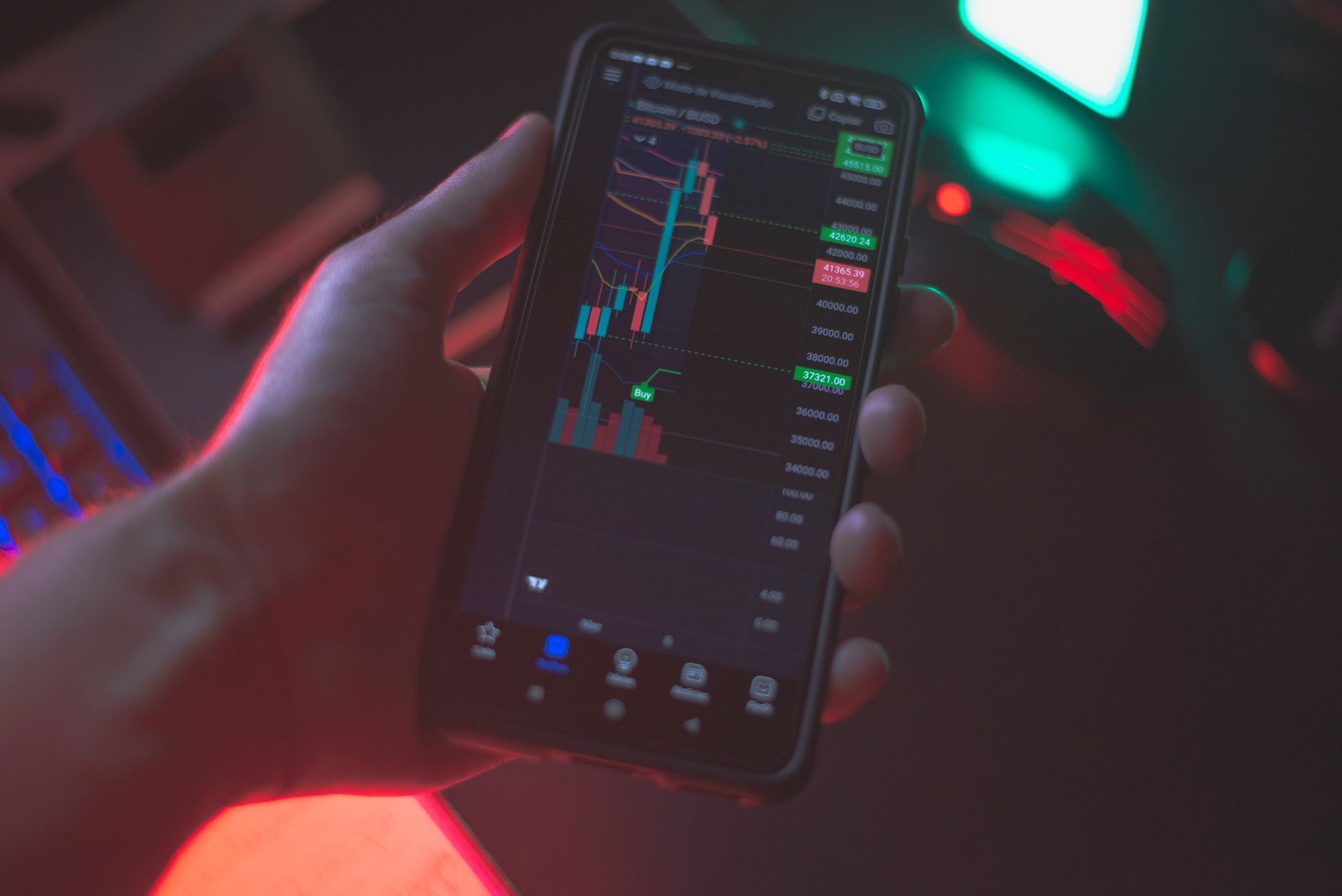
Here’s one thing you can do today: Open any crypto chart, find the RSI indicator, and look for a reading above 70 or below 30. If RSI is above 70, the asset may be overbought. Below 30, it may be oversold. That single observation — explained in plain language — is where crypto chart analysis tools and tutorials for beginners start making real sense.
Understanding what your charts are telling you is the difference between guessing and learning. Yet most beginners open a trading platform, see lines, candles, and squiggles, and feel lost. The good news? You don’t need a finance degree. You need the right tools and a clear explanation.
In this guide, we’ll walk through the essential crypto chart analysis tools and tutorials for beginners, show you how to use them step by step, and explain how Chartscope — an AI-powered crypto tutor — turns confusion into clarity.
Why Crypto Chart Analysis is Essential for New Traders

The Reality of Crypto Markets in 2026
Cryptocurrency markets are open 24/7, globally accessible, and notoriously volatile. In 2025, Bitcoin experienced daily price swings of 5% or more on 47 separate days, according to CoinMarketCap data. Without understanding what the charts are showing, you’re navigating these moves blind.
Many users who start trading without chart analysis lose money not because they picked the wrong coin, but because they entered or exited at the wrong time. A 2023 survey by the CFA Institute found that over 70% of retail crypto traders reported losses in their first year, with lack of market understanding cited as the primary reason.
What Chart Analysis Actually Does for You
Chart analysis — also called technical analysis — helps you:
- Identify trends (is the price going up, down, or sideways?)
- Spot potential reversals (when might a trend change?)
- Measure momentum (how strong is the current move?)
- Manage risk (where should you set stop-loss levels?)
The key insight: chart analysis doesn’t predict the future. It gives you probabilistic information based on historical patterns and market psychology. That’s why it’s an educational tool, not a crystal ball.
Why Beginners Struggle Most
The biggest barrier for new traders isn’t the indicators themselves — it’s the jargon. Terms like “RSI divergence,” “MACD crossover,” and “candlestick engulfing pattern” sound intimidating. Most educational content assumes you already understand the basics.
This is where crypto chart analysis tools and tutorials for beginners must bridge the gap. You need explanations that meet you where you are — not finance textbooks rewritten for crypto.
Key Chart Analysis Tools for Beginners: A Chartscope Overview

The Three Pillars: RSI, MACD, and Candlestick Patterns
Before using any tool, you need to know what to look for. Here are the three most important indicators for beginners:
| Indicator | What It Measures | Beginner-Friendly Signal | Why It Matters |
|---|---|---|---|
| RSI (Relative Strength Index) | Momentum (0–100 scale) | Above 70 = overbought; below 30 = oversold | Helps identify potential reversals |
| MACD (Moving Average Convergence Divergence) | Trend direction and strength | Line crosses above signal line = bullish | Confirms trend changes |
| Candlestick Patterns | Market psychology per time period | Doji = indecision; Engulfing = reversal | Visual reading of buyer/seller balance |
How Chartscope Makes These Tools Accessible
Chartscope is an iPhone app built specifically to explain these indicators in plain language. Unlike traditional charting platforms that throw numbers at you, Chartscope uses on-device AI to answer your questions about what you’re seeing.
For example, if you see a Shooting Star candlestick pattern on your chart, you can ask the AI Chat: “What does this candlestick mean?” The app responds with a clear explanation — no signals, no hype, just education.
The app runs entirely on your device using Apple’s Core ML framework. According to the site documentation, all AI processing happens locally — zero data is sent to external servers for analysis. This means your portfolio data and chart history stay private.
Feature Comparison: Chartscope vs. Traditional Tools
| Feature | Traditional Trading Platforms | Chartscope |
|---|---|---|
| AI explanations of indicators | ❌ No | ✅ Yes — AI Chat explains in plain language |
| Visual pattern recognition | ❌ Manual only | ✅ AI Vision reads your chart screenshot |
| Privacy | Varies (often track data) | ✅ On-device, zero tracking, no data collection |
| Educational focus | ❌ Trading signals | ✅ Educational only — no financial advice |
| Language support | Usually 1–2 | ✅ 9 languages |
| Price | Often free (with data selling) | €4.99/month with 3-day free trial |
Step-by-Step Tutorials: Mastering Crypto Indicators with Chartscope

Step 1: Understanding RSI — The Momentum Gauge
What RSI tells you: The Relative Strength Index measures how fast prices are changing. It ranges from 0 to 100.
How to read it: - Above 70: The asset may be overbought — price could drop or consolidate. - Below 30: The asset may be oversold — price could bounce up. - Around 50: Neutral momentum.
Try this now: Open any crypto chart on your phone. Add the RSI indicator (usually found in the “Indicators” menu). Look at the last 5–10 candles. Where is RSI right now?
With Chartscope: Take a screenshot of your chart. Open the AI Vision feature in Chartscope — it will identify the RSI level and explain what it means in context. You don’t need to calculate anything.
Step 2: Reading MACD for Trend Confirmation
What MACD tells you: The MACD line (blue) and signal line (orange) show trend direction and momentum strength.
How to read it: - MACD line crosses above signal line: Bullish signal (uptrend may start). - MACD line crosses below signal line: Bearish signal (downtrend may start). - Histogram bars getting taller: Momentum is strengthening. - Histogram bars getting shorter: Momentum is weakening.
Common beginner mistake: Using MACD alone without checking the overall trend. Always look at the bigger picture first.
Pro tip from Chartscope’s design: The app’s Insights v6 feature shows 9 structured cards including “Indicator conflict detection.” If RSI says overbought but MACD is still bullish, Chartscope flags the conflict — helping you avoid contradictory signals.
Step 3: Identifying Candlestick Patterns
Candlesticks show four data points per time period: open, close, high, low. The shape tells a story.
Three patterns every beginner should know:
- Doji — Open and close are nearly equal. The market is undecided. Often signals a reversal.
- Bullish Engulfing — A red candle is followed by a larger green candle that “engulfs” it. Buyers took control.
- Shooting Star — A small body with a long upper wick. Price went high then dropped. Potential bearish reversal.
With Chartscope’s AI Vision: You can take a screenshot of your chart, and the app identifies patterns automatically. It tells you why the pattern matters — not just its name.
Step 4: Using the AI Chat for Questions
The most powerful feature for beginners: Chartscope’s AI Chat is context-aware — it knows which coin and timeframe you’re viewing. You can ask:
- “Why did this MACD crossover happen now?”
- “Is this Doji significant for Bitcoin on the 4-hour chart?”
- “What’s the risk/reward ratio here?”
The AI never gives trading signals. It always explains the reasoning — so you learn why something matters, not just what to do.
Building Your Crypto Portfolio with Data-Driven Insights

Why Chart Analysis Improves Portfolio Decisions
Many beginners buy coins based on hype, social media posts, or “moon” predictions. Chart analysis replaces emotion with observation.
For example, if you’re considering buying a coin, you can check:
- Trend direction: Is the 50-day moving average above the 200-day average? That’s a “golden cross” — bullish.
- Volume: Is trading volume increasing or decreasing with the price move?
- Support/resistance levels: Where has the price bounced before?
Practical Portfolio Building Checklist
- Start with one coin you understand — not five you heard about on Twitter.
- Check the weekly chart first — big picture before details.
- Identify the current trend — up, down, or sideways.
- Look for clear support and resistance levels — where has price reversed before?
- Check RSI and MACD on the daily timeframe — are they aligned or conflicting?
- Use Chartscope’s Market Mood thermometer (0–100 scale) to gauge overall sentiment.
- Document your observations — write down what the chart is telling you.
How Chartscope Fits Into This Process
The app’s Insights v6 feature provides 9 structured cards including:
- Volatility — how much is price moving?
- Risk/Reward ratio — quantified for your current chart
- Momentum context — is the move accelerating or slowing?
- Market Mood — a thermometer from 0 (fear) to 100 (greed)
These aren’t signals to buy or sell. They’re educational data points that help you understand market conditions before making your own decisions.
For a deeper walkthrough, read our guide on how to use crypto education apps for portfolio building.
Beyond the Basics: Advanced Charting Techniques for Growth
Moving Beyond Single Indicators
Once you’re comfortable with RSI and MACD, you can layer in:
- Bollinger Bands — measure volatility. When bands widen, big moves are expected.
- Fibonacci Retracement — identifies potential support/resistance levels based on mathematical ratios.
- Volume Profile — shows where most trading occurred at each price level.
The Divergence Strategy
What it is: When price makes a higher high, but RSI makes a lower high — that’s bearish divergence. It means momentum is weakening even as price rises.
How to spot it: 1. Draw a line connecting two recent price highs. 2. Draw a line connecting the corresponding RSI highs. 3. If they slope in opposite directions, you have divergence.
Why it matters: Divergence is one of the most reliable early warning signals. It often precedes trend reversals by several candles.
Using Chartscope for Advanced Learning
Chartscope’s AI Chat supports multi-turn conversations. You can ask follow-up questions like:
- “Show me where divergence occurred on this chart.”
- “What does this Bollinger Band squeeze mean?”
- “Explain the conflict between RSI and MACD right now.”
The app’s on-device CoreML classification runs in about 1 millisecond — so responses are instant, and your data never leaves your phone.
The Learning Curve Reality
According to educational research cited by the CFA Institute, most learners need to see a concept applied 5–7 times before it sticks. Chartscope’s design supports this: you can scan any chart, ask questions repeatedly, and get consistent explanations.
For a detailed comparison of educational apps, see our crypto education app review for technical analysis 2026.
FAQ
What are the best crypto chart analysis tools for beginners?
The best tools are those that explain why, not just what. For beginners, RSI, MACD, and candlestick pattern recognition are the three essential starting points. Chartscope combines these with AI-powered explanations that teach you as you explore — making it ideal for new traders.
How can I learn crypto technical analysis effectively?
Learn by doing. Open a chart, look at one indicator at a time, and ask yourself what it’s showing. Use an educational tool like Chartscope that provides plain-language explanations. Focus on understanding why patterns matter, not memorizing names. Practice on historical charts first before making real decisions.
Does Chartscope offer tutorials for understanding crypto charts?
Chartscope is designed as an interactive tutor rather than a static tutorial library. Its AI Chat answers your specific questions about any chart you’re viewing. The AI Vision feature reads your chart screenshots and identifies patterns, trends, and formations — teaching you in real time as you explore.
Can chart analysis help me build a better crypto portfolio?
Yes, but indirectly. Chart analysis helps you understand market conditions, identify trends, and spot potential reversals. This knowledge helps you make more informed entry and exit decisions. However, chart analysis is educational — not a guarantee. Always combine it with fundamental research and risk management.
What are common mistakes beginners make in crypto chart analysis?
Three mistakes are most common: (1) Using too many indicators at once, creating conflicting signals. (2) Ignoring the higher timeframe — checking only the 5-minute chart without seeing the weekly trend. (3) Treating signals as predictions rather than probabilities. Chartscope’s indicator conflict detection helps you avoid the first two, and its educational focus addresses the third.
Continue Learning
- Beginner’s Guide: RSI & MACD for Crypto Charts 2026
- Top Crypto Education Apps: Features & Pricing for Beginners
- Crypto Portfolio Tracking for Education: Learn Market Dynamics
Last updated: 2026-06-29
Disclaimer: This article is for educational and informational purposes only. It does not constitute financial advice. Cryptocurrency markets are highly volatile. Always consult a qualified financial advisor before making investment decisions.